
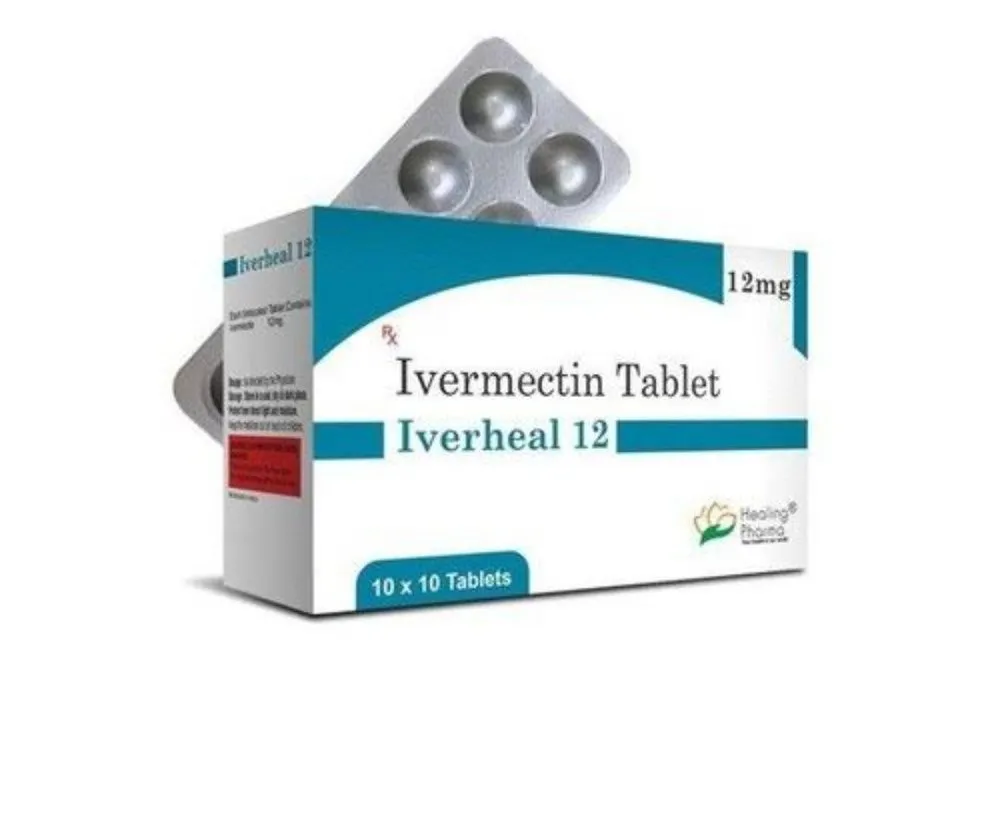
Ivermectin
Ivermectin is a macrolide antiparasitic drug that is widely used for the treatment of many parasitic diseases, such as river blindness, elephantiasis, and scabies. Satoshi Omura and William C. Campbell won the 2015 Nobel Prize in Physiology or Medicine for the discovery of the efficacy of Ivermectin against parasitic diseases. Ivermectin was approved by the FDA for use in humans in 1978. (1-3)
Ivermectin and the History of Medicine: More than a Horse Dewormer
Interest in ivermectin for cancer arose from: (1-3)
- High-throughput drug-repurposing screens
- Observations that ivermectin modulates ion channels, Wnt/β-catenin signaling, mitochondrial function, and tumor metabolism
- The broader concept that metabolically active, pleiotropic drugs may exert anticancer effects independent of their original indication
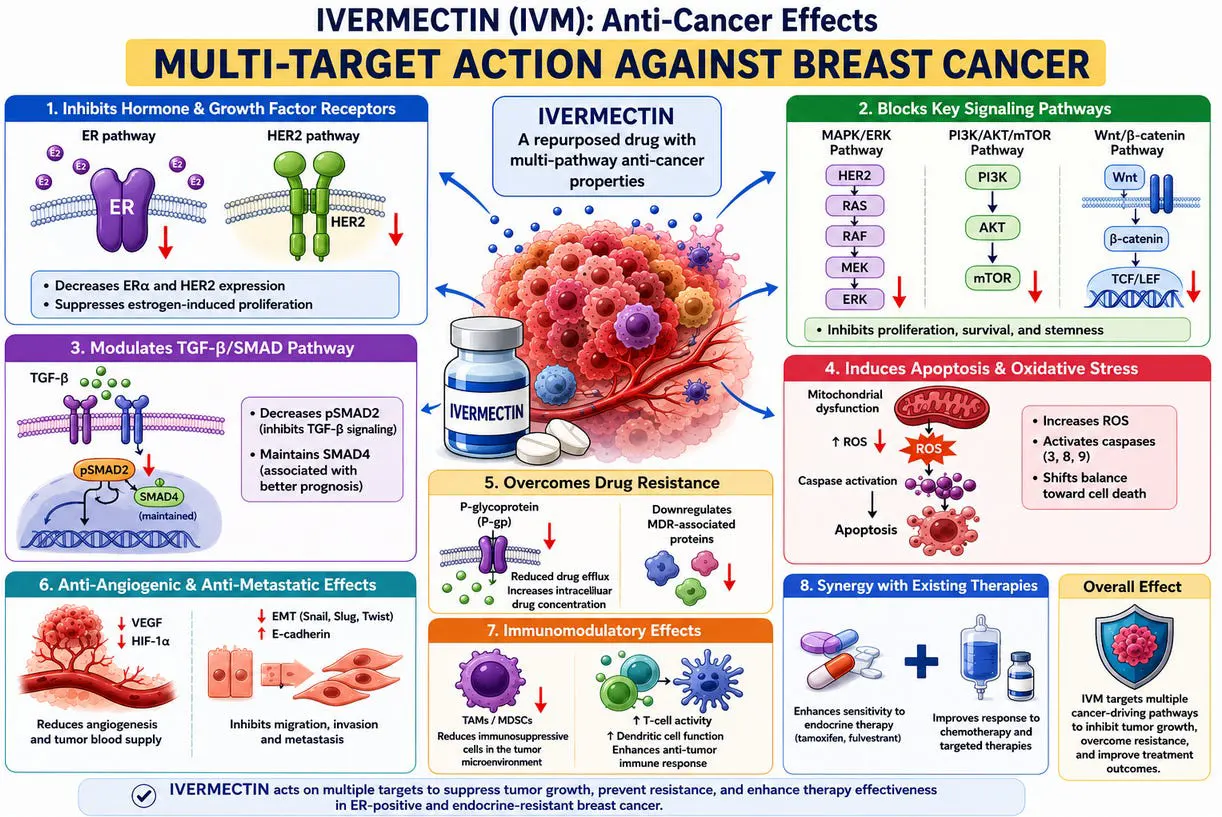
- Ivermectin has been reported to inhibit the proliferation of several tumor cells by regulating multiple signaling pathways.
Figure 1.
Anticancer pathways and mechanisms
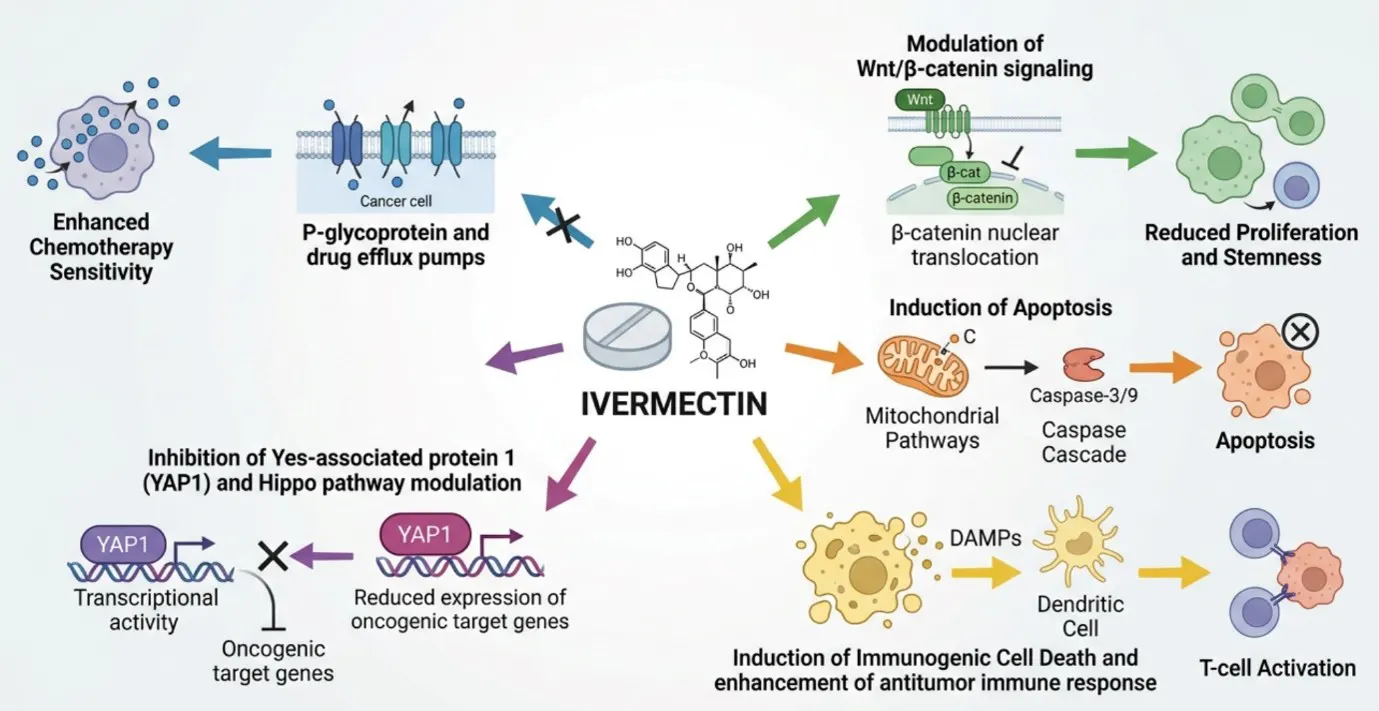
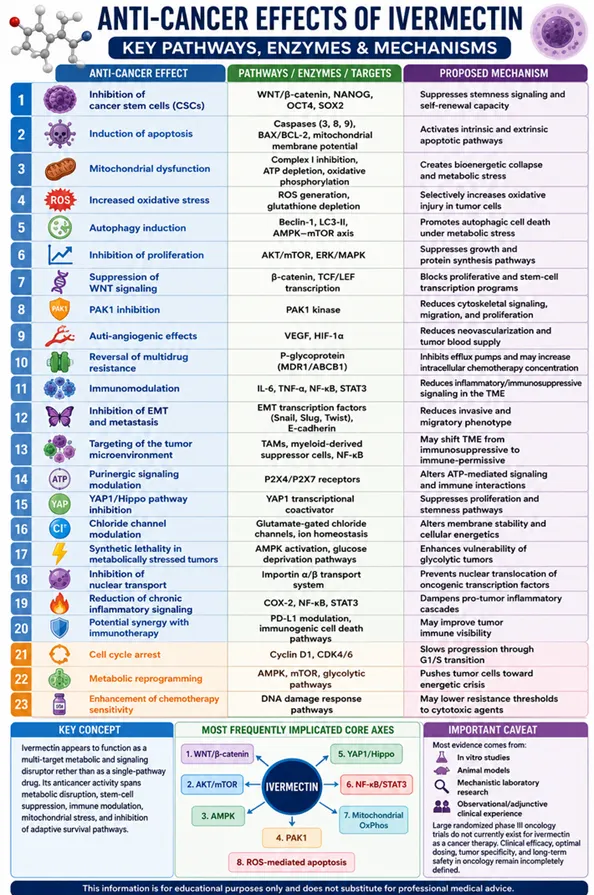
In 1996, Didier et al. found that ivermectin may effectively reverse tumor multidrug resistance, this is the first reported antitumorigenic activity of ivermectin.(4) Since then, many studies revealed that ivermectin exerted antitumor effects through multiple targets including chloride channel, PAK1 protein, Akt/mTOR signaling, P2X4/P2X7 receptors, WNTTCF pathway, SIN3 domain, NS3 DDX23 helicase and Nanog/Sox2/Oct4 genes (See figures 1-4). (5)
Experimental data demonstrated that ivermectin inhibited the proliferation of multiple breast cancer cell lines. (6) The mechanism involved the inhibition by ivermectin of the Akt/mTOR pathway to induce autophagy. Ivermectin has been demonstrated to inhibit the proliferation of canine breast tumor cell lines by blocking the cell cycle related to the inhibition of the Wnt pathway. (7) In a study that screened Wnt pathway inhibitors, ivermectin inhibited the proliferation of multiple cancers, including the colorectal cancer cell, and promoted apoptosis by blocking the Wnt pathway. (8) Other cancers that show an active WNT pathway and are inhibited by ivermectin include carcinomas of the lung, stomach, cervix, endometrium, and lung, as well as melanomas and gliomas. (8)
Ivermectin induces mitochondrial dysfunction by disrupting mitochondrial membrane potential, inhibits oxidative phosphorylation leading to ATP depletion and ROS generation.This aligns with metabolic oncology paradigms, particularly in tumors with high mitochondrial reliance. Ivermectin induces cancer cell apoptosis through the mitochondrial pathway.(1) Chen et al demonstrated that ivermectin inhibited the viability and induced apoptosis of esophageal squamous cancer cells through a mitochondrial-dependent pathway. (9) In addition, Sharmeen et al demonstrated that ivermectin induced chloride-dependent membrane hyperpolarization and cell death in leukemia cells. (10) Li et al demonstrated that Ivermectin induces nonprotective autophagy by downregulating PAK1 and apoptosis in lung adenocarcinoma cells.(5) Hu et al demonstrated that ivermectin augmented the efficacy of chemotherapy in an osteosarcoma cell line. (11)
Figure 2. Anticancer mechanisms and pathways of ivermectin
Heat shock protein-27 (HSP27) is highly expressed in and supports oncogene expression of many cancers. Ivermectin inhibits MAPKAP2-mediated HSP27 phosphorylation and depolymerization, thereby blocking HSP27-regulated survival signaling and client-oncoprotein interactions. (12) Ivermectin exerts an antitumor effect through the autophagy pathway. Using the autophagy inhibitors chloroquine and wortmannin or knocking down Bclin1 and Atg5 by siRNA to inhibit autophagy, the anticancer activity of ivermectin reduced significantly. (6)
Triple-negative breast cancer (TNBC) refers to cancer that is negative for estrogen receptor, progesterone receptor, and human epidermal growth factor receptor 2 (HER2) and is the most aggressive subtype of breast cancer with the worst prognosis. (13) In addition, there is also no clinically applicable therapeutic drug currently available. A drug screening study of TNBC showed that ivermectin resulted in impairment of clonogenic self-renewal in vitro and inhibition of tumor growth and metastasis in vivo by blocking the SIN3-interaction domain.(14)
Ivermectin has anticancer activity by influencing the tumor microenvironment. Ivermectin decreases MDSC and Tregs and targets cancer stem cells. (15, 16) Furthermore, ivermectin acts to suppress the action of tumor associated macrophages (TAMs), which otherwise produce aberrant cytokine signals that act to suppress tumor apoptosis via a number of pathways, particularly TGF-β, and also upregulates the expression of the p53 tumor suppressor gene.
Proposed Immunologic Effects of Ivermectin
- Modulate the Tumor Microenvironment
- Promote M1 macrophage polarization
- Reduce immunosuppressive M2 macrophages
- Potentially decrease myeloid-derived suppressor cells (MDSCs)
- Affect Purinergic Signaling
- Ivermectin is a positive allosteric modulator of P2X4 receptors
- Purinergic signaling influences immune cell recruitment and activation
- Inhibit Oncogenic Signaling
- WNT/β-catenin inhibition (important because β-catenin activation is linked to immune exclusion and ICI resistance)
Some preclinical data suggest synergy with:(17, 18)
- Metformin
- Doxycycline
- Mebendazole
- Chemotherapy (e.g., cisplatin)
- Metabolic stressors (fasting mimetics)
Although several antiparasitic drugs including ivermectin, mebendazole and niclosamide have proven anti-cancer effects it is important to recognize that cancer is NOT a parasitic disease as has been suggested in the “popular press” and by misguided clinicians. There is no evidence that cancer is caused by or related to any parasitic disease. These drugs act via specific biochemical pathways specific to the cancer cell which are distinct from their anti-parasitic mechanisms of action.
Figure 3.
SHOULD ALL WOMEN WITH BREAST CANCER BE TREATED WITH IVERMECTIN?
Figure 4.
Clinical studies
While numerous in vitro studies have demonstrated the effectiveness of ivermectin against multiple cancers, (2, 10-12, 17-28) the reported clinical effectiveness is limited to small case series. (29, 30) Recently Hulscher et al published a large observational study (122 patients completed the “study”) entitled “Real-World Clinical Outcomes of Ivermectin and Mebendazole in Cancer Patients: Results from a Prospective Observational Cohort”.(31) The authors claim that the Clinical Benefit Ratio (CBR) was 84.4% (95% CI: 77.0–89.8%). While this study is profoundly methodologically flawed, it does provide an interesting therapeutic signal. Furthermore, ivermectin is widely prescribed for cancer across the world. I am aware of hundreds of “anecdotal” reports of solid tumors and hematological malignancies that have shown a dramatic response to repurposed drug regimens that included ivermectin. “A single anecdote is a single anecdote”, however, numerous repeated anecdotes provide important observational clinical data. High quality observational studies using the multi-axis approach which includes ivermectin are needed to demonstrate the benefit of repurposed drugs for the treatment of cancer.
Safety (this is important)
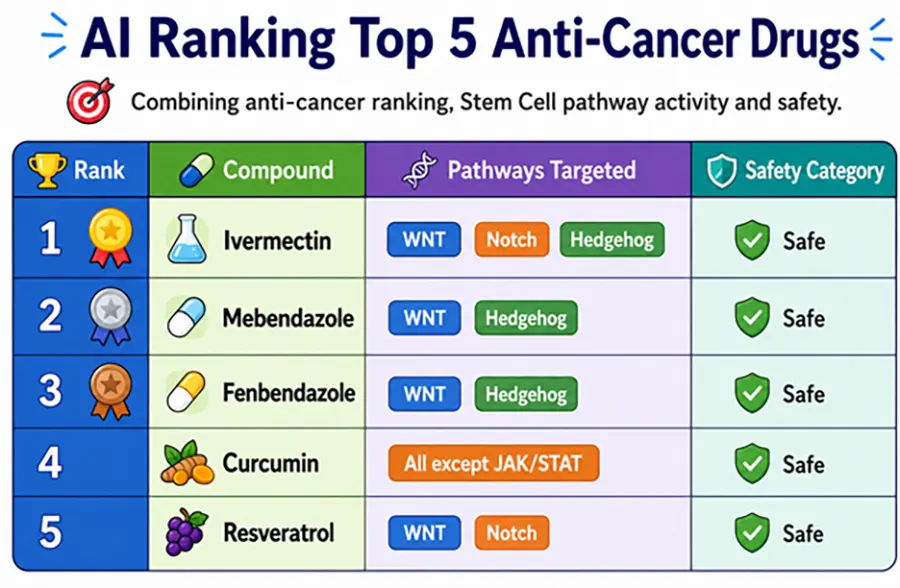
FIRST DO NO HARM. When considering a repurposed drug, the safety of the drug is critical. The safety of ivermectin is beyond question. Billions of dose of ivermectin have been taken by millions of patients (humans not horses) across this planet for the treatment various parasitic diseases. According to the WHO Pharmacovigilance Database, VigiAccess, (https://www.vigiaccess.org/). Ivermectin is one of the safest medications on this planet. The safety of ivermectin together with the multiple therapeutic targets (including stem cells) is largely the reason AI ranks ivermectin as the most effective anti-cancer drug currently available (see figure1 at top of post).
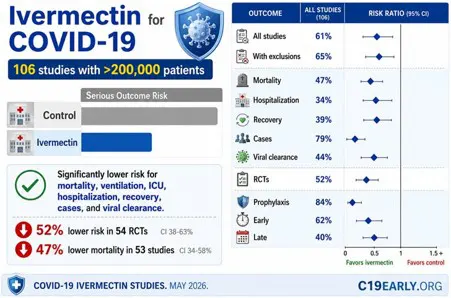
In addition, over 100 high quality studies enrolling over 200 000 patients have been published for the treatment of COVID-19 (https://c19early.org/i) . In these studies, Ivermectin has proven to be as safe as placebo (see Figure 5).
Figure 5.
Types of cancer ivermectin may be beneficial for
Ivermectin has shown in vitro activity against breast cancer (including TNBC), as well as lung, stomach, cervix, esophageal, endometrium, liver, prostate, kidney and ovarian cancer as well as cholangiocarcinoma, melanomas, leukemia, lymphoma and gliomas. (1)
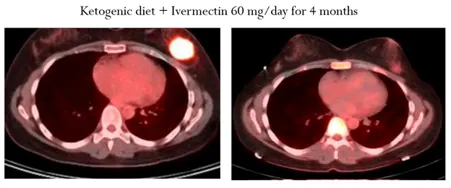
Figure 6. 34-year-old female with stage III breast cancer
Dosing and cautions
The optimal dosing strategy with ivermectin for the treatment of cancer is unclear. De Castro et al reported the use of 1mg/kg/day for up to 6 months in three pediatric patients with refractory AML without untoward side effects. (29) Ishiguro et al reported the use of ivermectin 12 mg twice weekly.(30) Anecdotal evidence suggest that a daily dose of 12-18 mg may be effective (prescribed indefinitely). As ivermectin has a remarkable safety record long term treatment at this dose appears safe. Generally, a starting dose of 0.4-0.6 mg/kg titrated up to 0.8mg /kg then 1mg/kg is suggested. Higher doses may be associated with visual disturbances and signs of neurotoxicity. As ivermectin does not cross the blood-brain barrier, ivermectin is likely less effective for brain tumors. Furthermore, caution is advised in patients with disruption of the blood-brain barrier.
Known Adverse Effects
- Dizziness, nausea, diarrhea
- Transient hypotension
- Neurotoxicity at high doses (ataxia, confusion, seizures)
Oncology-Specific Concerns
- Drug–drug interactions (CYP3A4)
- Antifungals such as ketoconazole, itraconazole, posaconazole
- Pre-existing liver disease
- Ivermectin can potentiate the anticoagulant effect of warfarin, increasing INR and bleeding risk.
- Blood–brain barrier disruption with chemotherapy
- Potential neurotoxicity in cachectic or frail patients